


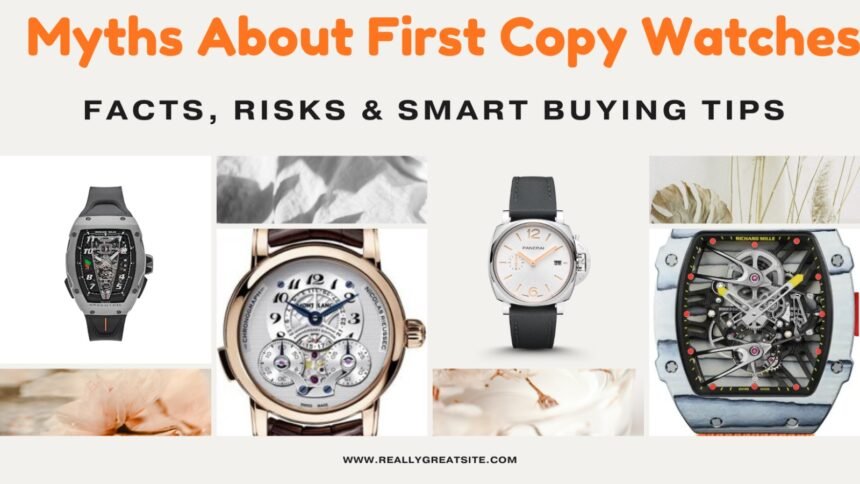
Many shoppers search for myths about first copy watches because these watches are often marketed as affordable alternatives to luxury timepieces. Before buying one, it helps to separate marketing claims from facts. A first copy watch is generally a replica or imitation of a branded watch, and buying or selling counterfeit products can involve serious legal and consumer risks.
This guide explains the most common myths, what buyers should realistically expect, and how to make a safer, more informed choice.
Myth 1: First copy watches last as long as originals
Some sellers claim that first copy watches are built to last for years. In reality, durability depends on the materials, movement quality, water resistance, and after-sales support—not on the “first copy” label.
Original luxury watches usually use tested movements, quality-controlled materials, and authorised service networks. A replica may look similar from outside, but it may not offer the same reliability, servicing, or warranty protection.
What to check instead: movement type, case material, glass quality, water-resistance rating, return policy, and whether the seller clearly states that the product is not an original branded watch.
Myth 2: First copy watches have the same weight as originals
Another popular claim is that a first copy watch feels exactly like the original. Weight alone is not a reliable way to judge quality.
Some replicas use heavier metals to imitate the feel of premium watches, while others use lighter materials. Even if the weight seems close, the internal movement, finishing, seals, and long-term performance can still be very different.
Better way to assess a watch: look at the finishing, alignment of hands and markers, crown operation, strap quality, and whether the seller provides transparent product specifications.
Myth 3: First copy watches offer all luxury-watch features
Many listings suggest that replica watches include date windows, day displays, chronographs, moon phases, or automatic movements just like luxury models. Some may have similar-looking features, but that does not mean they work with the same accuracy or durability.
A feature can look correct on a product page yet perform poorly in daily use. For example, a chronograph may be decorative rather than fully functional, or water resistance may be much lower than advertised.
Practical advice: never rely only on photos. Ask for clear written details about functions, battery or movement type, water resistance, and warranty terms.
Myth 4: First copy watches are always cheap
People often assume every first copy watch is inexpensive. Prices can vary widely based on the seller, materials, movement, and claimed level of copying.
A low price does not always mean good value. If the watch stops working soon after purchase, cannot be repaired, or has no return support, the total cost can become higher than expected.
Value is not only price. Consider lifespan, repair options, warranty, refund policy, and the risk of receiving a product different from the listing.
Myth 5: Buying first copy watches online is always safe
Online marketplaces make it easy to find replica watches, but they also increase the risk of misleading listings, poor-quality products, and unclear seller information. Before ordering, buyers should research the seller carefully.
Check customer reviews, product photos, contact details, return policies, payment protection, and whether the website clearly explains what it is selling. Avoid sellers who use brand logos or claim a replica is “original,” “authentic,” or “1:1 genuine.”
Myth 6: First copy watches are legal everywhere
This is one of the most important myths to correct. In India, selling or distributing counterfeit goods can violate trademark laws and may lead to penalties, seizure, or legal action.
Even if a buyer does not intend to resell the product, purchasing counterfeit goods can support trademark infringement and may leave the buyer without consumer protection. For a safe purchase, choose legally sold, unbranded, or authorised watches rather than products that imitate protected brand names or logos.
How to choose a watch safely
If your goal is style on a budget, consider these safer alternatives:
- Buy a reputable budget or mid-range watch brand from an authorised seller.
- Choose an unbranded designer-style watch that does not copy logos or trademarks.
- Look for clear specifications, warranty details, and genuine customer reviews.
- Avoid listings that use luxury brand names, logos, or “original quality” claims.
- Pay through secure methods that offer buyer protection.
- Keep invoices, product descriptions, and communication records in case of a dispute.
Final thoughts
The biggest myth about Hublot first copy watches is that they give the same experience as original luxury watches without any drawback. They may look similar in photos, but differences in quality, durability, service, and legality can matter greatly.
If you want a stylish watch at a reasonable price, focus on transparent sellers, legal products, and clear product information. That approach protects both your money and your peace of mind.